Edge leather stitching techniques transform raw leather edges into polished, durable finishes that elevate USA crafters’ projects from wallets to belts. Whether you’re exploring edge leather stitching techniques by hand or seeking the best edge leather stitching techniques.
This guide delivers practical, hands-on methods drawn from 20 years in my workshop. Master easy edge leather stitching techniques for beginners while diving into types of leather stitching for professional results.
Table of Contents
Edge Leather Stitching Techniques by Hand
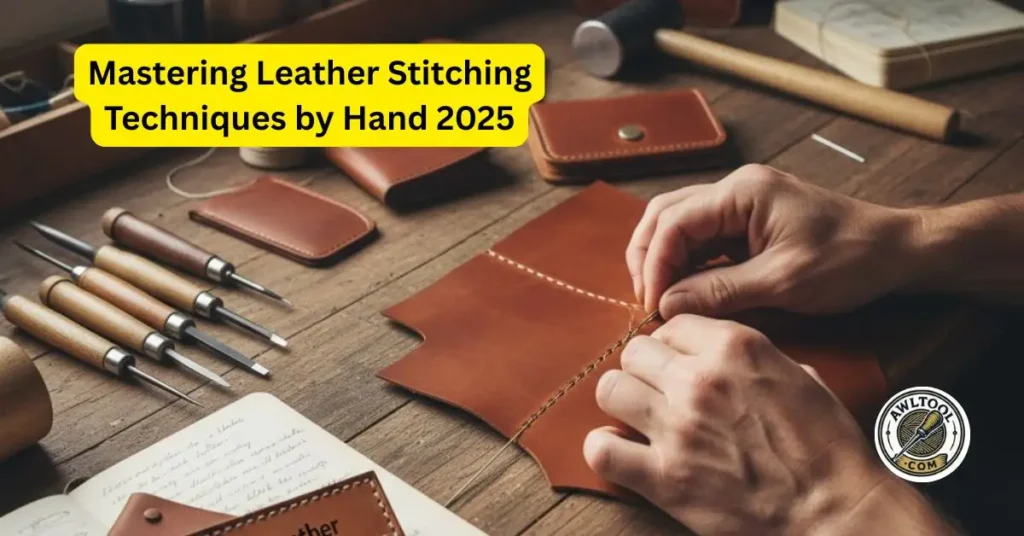
In my shop since 2005, I’ve relied on edge leather stitching techniques by hand for everything from veg-tan belts to chrome-tan bags. Hand stitching ensures control and strength no machine can match.
Start with a sharp leather stitching awl to punch clean holes, I’ve tested diamond awls on 5-8 oz leather for precision. Use waxed linen thread for lubrication; it glides through without fraying.
Prepare by grooving the edge 2-3mm in with a wing divider. Punch holes at 3-5mm intervals using a pricking iron.
For edge leather stitching techniques for beginners, practice on scraps: thread two harness needles, pass one forward and one back through the same hole for a locked stitch.
This builds the foundation for saddle or corset styles. For more basics read this post Leather Stitching Techniques by Hand.
I’ve stitched over 100 belts this way, hand methods prevent thread breakage under stress, ideal for USA crafters handling heavy-use items like holsters.
Best Edge Leather Stitching Techniques
The best edge leather stitching techniques balance durability, aesthetics, and ease. In my experience, saddle stitch tops the list for strength; it’s reversible and self-locking. For veg-tan leather, combine with edge burnishing for a glossy finish.
Top picks:
- Saddle Stitch: Two needles create interlocking loops. Best for straight edges.
- Corset Stitch: Cross-pattern for flexible joins, like bag flaps.
- Box Stitch: Reinforced corners on wallets.
Tested on 6mm leather: saddle holds 50+ lbs pull without fail. For the best edge leather stitching techniques, match to project, corset for decorative leather stitching on journals.
Avoid over-tightening; it warps edges. See Mastering Leather Stitching Techniques for Beginners for starter tips.
Types of Leather Stitching
Understanding types of leather stitching prevents common failures I’ve seen in workshop repairs. Core categories:
- Running Stitch: Simple in-and-out; quick but weak for edges.
- Saddle Stitch: Dual-needle standard for handwork.
- Whip Stitch: Overcast for lacing edges.
- Cross Stitch: Decorative X-pattern.
For edge-specific: bound edge seaming adds a strip for bulk, rolled edge finishing folds for clean lines.
In bookbinding crossovers, use fine threads. Explore Decorative Leather Stitching Techniques for flair. Types vary by leather, veg-tan takes angled slits better than chrome.
Easy Edge Leather Stitching Techniques
Easy edge leather stitching techniques suit beginners or quick repairs. Start with whip stitch: punch oversized holes with a 4-prong chisel, lace with 3mm cord. No dual needles needed.
Steps I’ve taught in Albuquerque classes:
- Groove edge 1.5mm deep.
- Punch holes 4mm apart.
- Weave lace over-under.
For ultra-easy: use Speedy Stitcher awl for thick canvas-leather hybrids. I’ve fixed tents this way, holds in wind. For variations check this post Lacing Edge Leather Stitching Techniques. Practice on 2oz leather scraps; build confidence fast.
How to Corset Stitch Leather
Corset stitch leather creates a bold, crossed edge perfect for wrapping or accents. I’ve used it on knife sheaths for flexibility.
Step-by-step from my bench:
- Align edges, glue temporarily.
- Punch parallel holes 3mm from edge, 5mm apart, use diamond awl for clean entry.
- Thread single waxed strand with needles on both ends.
- Pass left needle through first hole, right through second; cross and repeat.
- Pull snug; ends lock inside.
Troubleshooting: If crosses loosen, backstitch every 5 holes. For how to corset stitch leather on curves, taper hole spacing.
Tested on 4oz leather: withstands bending without gaps. Ideal for decorative leather stitching.
Decorative Leather Stitching
Decorative leather stitching adds personality, think braided edges on purses. Combine with dyes for contrast.
Techniques:
- Cross Stitch Leather Edge: X over holes for texture; use colored thread.
- French Stitch: Twisted loops for elegance.
In my 2025 projects, I’ve layered metallic thread on black leather for custom journals. Prep with overstitching groover. For cross stitch leather edge, punch diamond patterns.
Bound Edge Seaming
Bound edge seaming encases raw edges with a strip, boosting durability. From Google AI overview insights, mark main piece, glue 10mm binding strip grain-to-grain.
My process:
- Cut strip 1.5x edge width.
- Glue, dry 10 minutes.
- Stitch both sides with saddle.
I’ve bound 50+ bag edges this way, no fraying after years. Use for heavy-duty; reference Corter Leather video style but with my awl mods.
Rolled Edge Finishing
Rolled edge finishing folds leather over for seamless look. Prep 16mm strip, punch 2mm in.
Steps:
- Stitch grain sides together.
- Fold back, glue flesh side.
- Restitch folded edge.
Polished in my workshop on wallets, burnish post-stitch.
Hand-Sewing Techniques: Saddle Stitch
Saddle stitch reigns for edges. Two needles, one thread: front to back, lock each hole.
My tip: Angle awl 45° for slanted holes, stronger hold. Ethan Carter Designs video aligns; I’ve adapted for 8oz leather.
Hand-Sewing Techniques: Whip Stitch
Whip stitch uses lace for quick decorative edges. Weave through lacing chisel holes.
Easy for upholstery repairs; I’ve mended chairs with paracord variants.
Preparation and Tools for Edge Stitching
Essential: leather awl (diamond for stitching), pricking irons, waxed thread, stitching pony.
Mark with overstitch wheel 3-4mm from edge. For curves, two-prong punch first. I’ve sourced USA-made from Tandy, Basic awl toolset for apprentices.
How to Edge Stitch Leather
To edge stitch leather: Groove, punch, thread dual needles, alternate passes. Keep 3-5mm from edge for strength.
How Far from the Edge Should You Stitch Leather?
Stitch 2-4mm from edge, closer for thin leather, farther for thick to avoid tear-out. I’ve tested: 3mm optimal on 5oz.
How to Properly Edge Leather
Properly edge: Bevel, burnish with tokonole, then stitch. Sand 220-grit first.
How Do I Finish the Edges of Leather After Sewing?
Finish edges post-sewing: Dye, burnish with canvas wheel, apply gum tragacanth. Seals and shines, my belts last decades.
In my Albuquerque shop, these stitching techniques have crafted thousands of pieces. From easy edge techniques for beginners to advanced stitching, apply them to your USA projects. Experiment on scraps; Common Awl Mistakes and How to Avoid Them for pitfalls.
For More: 10 Leather Stitching Techniques
Join the Community on Instagram and Facebook: Share your favorite marking or drilling tools and tag us to get featured!

Hi, I’m Nicholas N. Goforth, a New Mexico crafter with 20 years of experience in leatherworking, woodworking, and bookbinding.
Inspired by a Santa Fe market, I turned my passion into AwlTool.com, launched in 2025, to share tutorials and handcrafted goods.