

How do I sharpen an awl if it becomes dull? If you’re dealing with a blunt scratch awl, leather stitching awl, or woodworking awl, sharpening it isn’t rocket science. But it does require the right tools and technique to maintain that precise point.
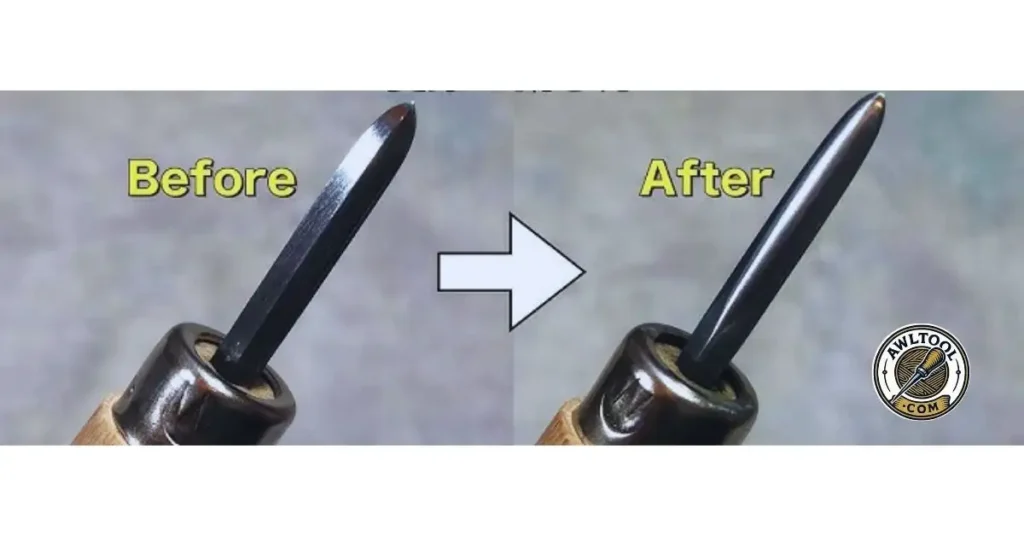
In this article, I will guide you How to Sharpen an Awl? and 6 Step-by-Step Guide for beginner and pro Crafters. Let’s dive in and get your awl back to peak performance.
Table of Contents
6 Step-by-Step: How to Sharpen an Awl Like a Pro
Sharpening an awl takes about 10-15 minutes once you get the hang of it. Follow these steps for a needle-sharp point. I’ll use a scratch awl as an example, but the process works for most types, including leather awls.
Step 01: Prepare Your Workspace
Set up on a stable surface. Clamp the awl handle securely so the tip points away from you. Wear your safety gear, I’ve nicked myself enough times to know better.
Step 02: Inspect the Awl Tip
Hold it under good light. Look for nicks, bends, or dullness. If it’s bent, gently straighten it with pliers wrapped in cloth to avoid scratches.
Step 03: Rough Sharpen with a File
If the tip is very dull, use a diamond file. Hold the file at a 20-30 degree angle to the bevel (the sloped edge). Stroke away from the tip in smooth, even motions. Do 5-10 passes per side. Rotate the awl for even sharpening.
Step 04: Hone on a Whetstone
Wet the stone with water or oil. Maintain that 20-30 degree angle. Glide the bevel across the stone in circular motions or straight pulls. Alternate sides every few strokes. Aim for 20-30 passes total until you feel a burr (a thin metal edge).
Step 05: Remove the Burr and Polish
Flip to the flat side and lightly stroke to remove the burr. Then, switch to your leather strop loaded with polishing compound. Pull the tip across it 10-15 times per side for a mirror finish.
Step 06: Test the Sharpness
Gently press the tip into scrap wood or leather. It should pierce easily without much pressure. If not, repeat steps 4-5.
Pro tip from my years in the shop: For diamond awls used in leather stitching, focus on the facets, sharpen each one evenly to keep the shape intact.
Why Sharpening Your Awl Matters for Your Crafts
A dull awl can ruin your work faster than you can say “oops.” In leatherworking, it might snag and tear hides. For woodworking, it could splinter edges instead of marking clean lines.
And in bookbinding, a blunt tip makes messy holes in paper signatures. Sharpening keeps your tool efficient, reduces effort, and extends its life—saving you money on replacements.
From my experience testing brands like C.S. Osborne and Narex, a well-maintained awl performs better in everything from saddle stitching to pilot hole creation.
Plus, regular sharpening prevents accidents; a sharp tool requires less force, lowering the risk of slips. If you’re new to this, check out my picks for beginner kits on Best Awl Tool in 2025 or 9 Best Awl Tool Sets for Leatherworking.
Tools and Materials You’ll Need to Sharpen an Awl
Before we start, gather these essentials. I keep them in my Albuquerque workshop, where the dry air makes tool care even more crucial.
- Fine-grit sharpening stone or whetstone (around 1000-3000 grit for polishing).
- Diamond file or honing rod (great for tough steel awls like those from Stanley).
- Leather strop or polishing compound (for that razor-fine edge).
- Safety gear: Gloves, eye protection, and a clamp to secure the awl.
- Magnifying glass or loupe (optional, but helpful for inspecting the tip).
- Light oil (like mineral oil) for lubrication.
Aim for quality, cheap stones wear out fast.
Common Mistakes to Avoid When Sharpening an Awl
I’ve seen (and made) these errors over two decades. Dodge them for better results.
- Over-sharpening: Too much grinding thins the tip, making it fragile. Stop when it’s sharp, not needle-thin.
- Wrong Angle: A steep angle (over 45 degrees) creates a weak edge. Stick to 20-30 degrees for durability.
- Skipping Safety: No gloves? You’re asking for cuts. Always protect your hands and eyes.
- Ignoring Maintenance: Don’t wait until it’s dull—hone your awl after every few projects.
- Using Dull Tools: A worn-out stone won’t sharpen anything. Invest in quality awl tool.
If your awl is high-carbon steel (common in USA-made brands like Klein Tools), it sharpens easier but rusts faster—oil it after.
Safety Tips for Awl Sharpening and Use
Safety first, I’ve got the scars to prove it. Here’s what keeps me crafting without ER visits.
- Work in a well-lit, ventilated area.
- Secure the awl firmly to prevent slips.
- Stroke away from your body.
- Store sharpened awls point-down in a block or sheath.
- For kids or beginners, supervise closely.
In New Mexico’s dry climate, tools rust less, but wherever you are, clean and oil after sharpening.
Troubleshooting: What If Your Awl Won’t Sharpen?
Sometimes, issues pop up. Here’s how I fix them.
- Tip Breaks: If it’s cheap metal, replace it. For quality ones, file down the break and reshape.
- Uneven Edge: Check your angle consistency—use a guide if needed.
- Still Dull After Sharpening: Your stone might be too coarse. Switch to finer grit.
- Rust Spots: Sand them off gently before sharpening.
If it’s beyond repair, browse my recommendations on Awl Tools USA.
FAQs About Sharpening an Awl
Based on questions I get from my community (and what folks search online), here are quick answers.
How often should I sharpen my awl?
It depends on use every 5-10 projects for heavy leatherworking, or monthly for light woodworking. Test by feel: If it drags, sharpen it.
Can I sharpen a sewing awl the same way?
Yes, but be gentle on the needle eye. Focus on the point and avoid filing near the thread hole.
What’s the best stone for awl sharpening?
A 2000-grit waterstone works wonders. For pros, diamond plates from brands like DMT are durable and fast.
Is there a difference in sharpening scratch vs. diamond awls?
Scratch awls have a simple point, easy to hone. Diamond awls need facet-by-facet care to maintain their shape for clean leather holes.
Can I use a knife sharpener for my awl?
Avoid it, they’re not precise enough. Stick to stones or files for control.
Got more questions? Drop them in the comments or join our community.
Wrapping Up: Keep Your Awl Sharp and Your Crafts Sharp Too
Sharpening an awl is a simple skill that pays off big in your crafting. With the right tools, steps, and care, you’ll pierce materials like butter and create pro-level work.
Remember my wallet disaster? Proper maintenance turned me from frustrated beginner to master crafter. Now, it’s your turn—grab your awl and give it a hone today.
What was your worst dull-tool mishap? Share in the comments below—I’d love to hear your stories and tips!
For more guides, check out What Are Some Popular Awl Brands? In The USA. And if you’re ready to upgrade, visit AwlTool.com for my handpicked selections.
Join the conversation on Instagram and Facebook: Share your favorite marking or drilling tools and tag us to get featured!
Related Article:
Check This How to Sharpen an Awl Video:

About Writer
Hi, I’m Nicholas N. Goforth, a New Mexico crafter with 20 years of experience in leatherworking, woodworking, and bookbinding.

