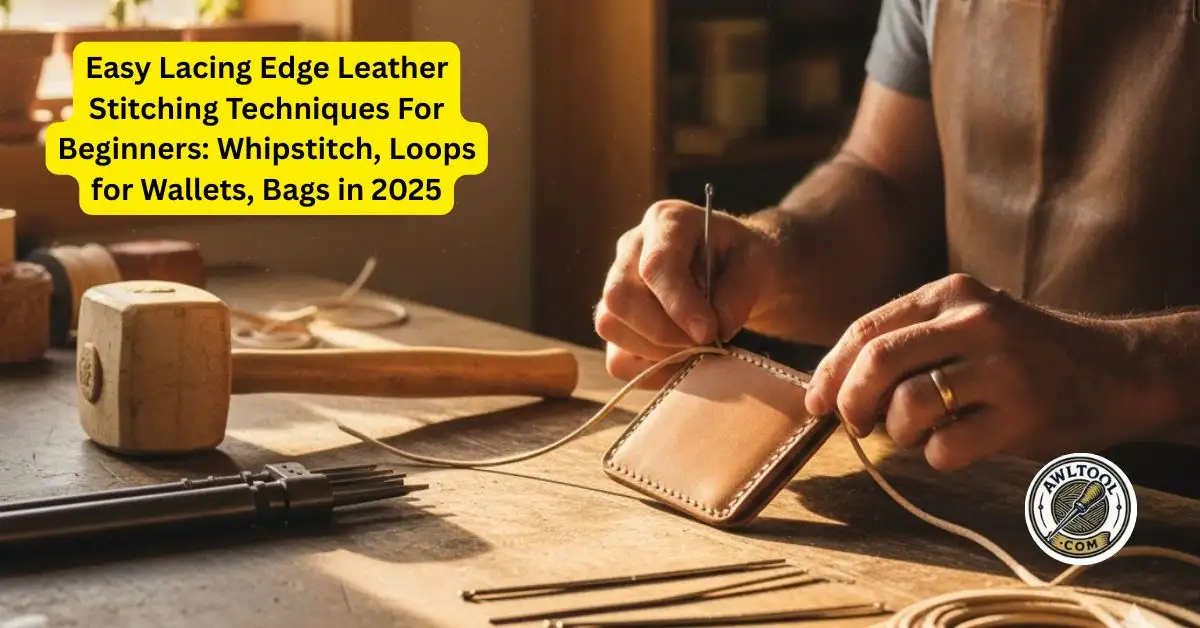
For beginners in the USA, lacing edge leather stitching techniques for beginners shine with easy methods like whipstitch for wrapped borders, single loop for clean uniformity, and double loop for dense strength, ideal for edging wallets, bags, belts, and cases without machines.
Grab basics like chisel, mallet, needles, and lace; maintain even tension to avoid bunching, double-pass corners for smooth turns, tuck ends for hidden finishes, and fix mistakes by repunching uneven holes. Since 2005, these affordable steps deliver professional results.
Table of Contents
Essential Tools for Lacing Edge Leather Stitching Techniques For Beginners
Starting out? I’ve tested countless tools over 20 years, and for USA beginners, keep it simple and under $50—no fancy setups needed. Drawing from shops like Tandy Leather, here’s what you’ll want.
Also Check: Awl For Sale
- Lacing Chisel or Awl: For even hole punching opt for a 4-prong model ($10-15) to space 1/8 inch apart easily.
- Rawhide Mallet: Taps without marring leather; my first from Santa Fe in 2006 still serves well.
- Lacing Needles: Flat-pronged for secure lace hold ($5 pack).
- Leather Lace: 1/8-inch vegetable-tanned; cut 3.5 times your edge length and pre-stretch.
- Optional Edge Groover: Recesses stitches for wear protection ($10-20).
- Stitching Pony: Steady hold for hands-free work ($20-30).
These build a solid foundation. For awl details in punching, see Best Awl Tool in 2025.
Step-by-Step Preparation for Leather Edge Lacing
Preparation prevents pitfalls, I learned this the hard way on my debut belt, where rushed holes led to restarts. Follow these for smooth sailing.
- Round Edges: Beveller or sandpaper softens corners, reducing snags on bags or cases.
- Mark and Punch Holes: Groove 1/8 inch from edge, punch uniformly. Start at ends for alignment.
- Prep Lace: Taper one end, soak briefly for pliability, avoids breaks mid-stitch.
- Thread Needle: Lock lace in prongs; test tension on scrap.
This quick setup echoes tips from “The Leatherworking Handbook” I’ve cherished since 2005.
How to Whip Stitch Leather: Beginner-Friendly Guide
Whipstitch, my timeless favorite, wraps like a desert vine for decorative strength, perfect for belts preventing fraying. “How to whip stitch leather?” Here’s the breakdown.
- Start Securely: Thread from inside second hole, leave tail, wrap over edge to next hole, pull snug.
- Build the Stitch: Repeat wrapping and pulling; even tension keeps it neat.
- Corner Turns: Double through corner hole, use awl to widen if tight.
- Hide Ends: Backstitch 3-4 times, trim flush for invisibility.
From woodworking crossovers, this adds flair. Practice avoids common twists.
Single Loop Leather Lacing: Simple Steps for Clean Edges
Single loop leather lacing offers effortless uniformity, like threading beads, ideal for wallets or light cases. Forgiving for newbies, it built my confidence early on.
- Initiate: From back, pass through first hole, loop over to next.
- Continue Stitching: Single pass per hole, gentle pull for consistency.
- Manage Tension: Avoid slack; straighten lace as needed.
- Corners and Finishes: Reinforce turns with extra loop, tuck end under.
This technique shines in quick projects, fixes for gaps: repull sections carefully.
Double Loop Leather Lacing Instructions: Build Durable Borders
For denser hold on bags or sheaths, double loop leather lacing instructions elevate basics—two passes per hole, like reinforced trails in New Mexico mountains.
- Begin the Pattern: Through first hole, back to second, crossing on reverse.
- Double Each Step: Loop twice, firm tension without puckering.
- Navigate Corners: Triple for secure pivots.
- Secure Ends: Weave back 5 stitches, hide neatly.
Strong for daily use; mistake fix: loosen with awl if over-tightened.
Tension Tips, Corner Turns, and Hiding Ends in Leather Lacing
Tension is crafting’s pulse, too loose flops, too tight warps. From shop trials, pull to flatness.
- Tension Mastery: Sectional checks every 5 stitches; pre-stretch lace prevents sags.
- Smooth Corners: Double/triple passes ensure flat turns, key for belts.
- Hiding Ends: Tuck and glue with beeswax; “how to tie off leather lacing?” Backweave knots.
These hand sewing leather tips, honed over decades, yield pro finishes.
Common Mistakes in Sewing Leather and Easy Fixes
Mistakes happen, I once bunched a case edge from haste. “What are common mistakes when sewing leather?”
Here’s prevention and repair.
- Uneven Tension: Unpick, re-lace evenly.
- Hole Misalignment: Use templates; repunch carefully.
- Lace Twists: Straighten ongoing; soak stubborn ones.
- Exposed Ends: Deeper tucks for seamless looks.
Practice on scraps transforms errors into lessons.
Lacing Techniques for Specific Projects: Wallets, Bags, Belts, Cases
Match stitches to items for optimal results, my community swears by this.
- Wallets: Single loop for slim, clean edges.
- Bags: Double loop for robust structure.
- Belts: Whipstitch resists wear.
- Cases: Blend single/double for versatility.
Vegetable-tanned leather suits all, available USA-wide.
For more: 10 Leather Stitching Techniques
Advanced Leather Lacing Variations: Edge Lock Stitch and Beyond
Ready for more? Edge lock stitch leather interlocks for ultimate security, try after basics. Explore how to lace leather chaps for scaled-up methods. Watch lacing edge leather stitching techniques YouTube demos.
Resources and Connections for Leather Crafters
For hand methods, check
- Leather Stitching Techniques by Hand
- Edge Leather Stitching Techniques
- Decorative Leather Stitching Techniques
People Also Ask: Leather Lacing FAQs
Drawing from over 20 years in my Albuquerque workshop, I’ve answered these common questions on lacing edge leather stitching techniques for beginners.
What is the 2-1-3 method of lacing?
The 2-1-3 method is a decorative leather lacing technique creating textured patterns: advance two stitches forward, one back, then three forward, repeating for a braided-like edge. Ideal for adding flair to bags or belts in beginner projects, it enhances durability on vegetable-tanned leather. From my tests on wallet edges, start with even hole spacing (1/8 inch) to avoid bunching, practice on scraps for consistent tension and professional results.
How far from the edge should you stitch leather?
For secure leather stitching, position holes about 1/8 inch from the edge to prevent tearing while allowing strong holds on items like cases or belts. For finer details on wallets, go closer to 1/16 inch. Since 2005, I’ve found this distance protects against wear; use an edge groover for recessed lines. Always punch evenly with a chisel for clean lacing edge leather stitching techniques.
What are common mistakes when sewing leather?
Common mistakes include inconsistent tension causing sags or bunches, uneven hole spacing leading to messy edges, over-pulling that warps leather, and leaving visible ends instead of hiding them. Beginners often skip practicing on scraps, resulting in twisted lace. From my 20+ years crafting, fix these by pre-stretching lace, using templates for spacing, and backstitching ends, essential tips for hand sewing leather to achieve pro finishes without machines.
How to tie off leather lacing?
To tie off leather lacing securely, weave the end back through 3-5 previous stitches from the inside, pull tight for even tension, then trim flush and tuck under the seam for a hidden knot. For synthetic lace, melt the tip slightly. In my New Mexico shop projects like bag edges, this prevents unraveling; add beeswax for grip. This simple finish elevates beginner lacing edge leather stitching techniques, ensuring durable, invisible closures.
Show me examples of different lacing stitches
Whipstitch: Wraps lace over the edge for a classic, fray-preventing border, great for belts. Single loop leather lacing: One pass per hole for clean, uniform edges on wallets.
Double loop: Twice per hole for dense, strong patterns on bags.
Edge lock stitch leather: Interlocks for ultimate security on cases. From my bookbinding trials, visualize via lacing edge leather stitching techniques YouTube videos; start with vegetable-tanned leather for easy handling.
What’s the best type of leather for edge lacing for a beginner project?
Vegetable-tanned leather is best for beginner edge lacing, it’s firm yet pliable, holds stitches without stretching, and is widely available in USA shops like Tandy Leather. Avoid chrome-tanned for starters as it’s softer and prone to tearing. In my 2005-started journey, I’ve used it for wallets and belts; it takes punches well at 1/8-inch spacing.
Conclusion
Mastering lacing edge leather stitching techniques for beginners unlocks endless creativity with whipstitch, single, and double loops, transforming simple wallets or bags into treasures.
From my fire-inspired AwlTool.com launch in 2025, remember: patience and practice yield the best. Start with scraps, embrace the leather’s scent and feel. What’s your debut project?
Comment below, let’s connect in our crafting community!
Join the Community on Instagram and Facebook: Share your favorite marking or drilling tools and tag us to get featured!
Best Awl tools Short lists by job categories:

Hi, I’m Nicholas N. Goforth, a New Mexico crafter with 20 years of experience in leatherworking, woodworking, and bookbinding.
Inspired by a Santa Fe market, I turned my passion into AwlTool.com, launched in 2025, to share tutorials and handcrafted goods.